
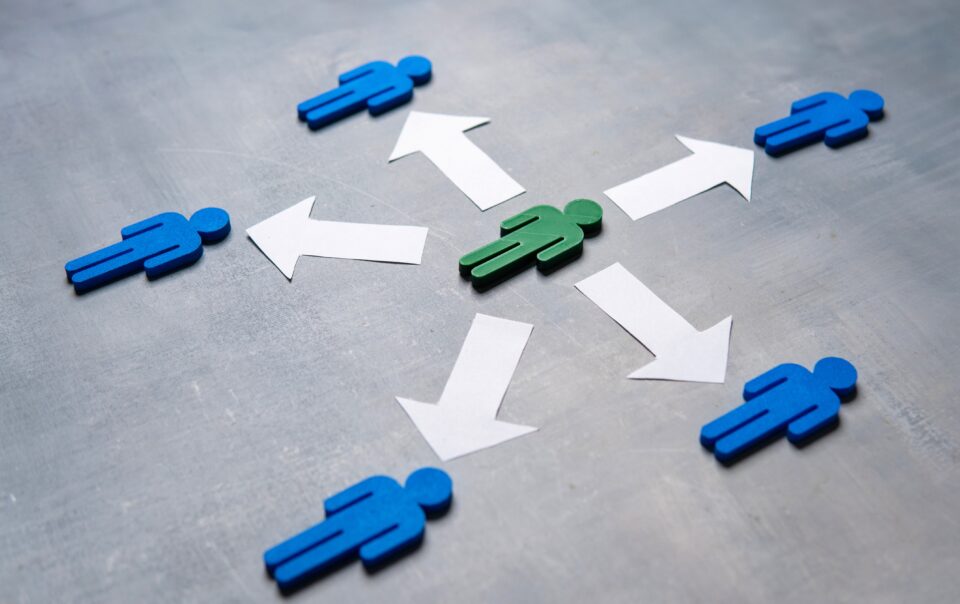



We live in a world that conditions us to believe that action equals strength and silence equals defeat.
Not raising your voice, choosing not to react, or stepping back is often seen as weakness—especially when there’s no context to explain it.
When someone misunderstands us, blames us, or challenges our beliefs, we feel an instinctive urge to respond. To defend. To prove. To be heard.
And in those moments, silence feels uncomfortable—even wrong. But what if the most powerful thing you could do… is absolutely nothing?
Choosing not to react is not apathy. It’s awareness. When done intentionally, silence becomes:
Not every situation demands your voice.
Not every trigger deserves your response. Sometimes, the wisest move is to step back and observe.
People often encourage us to speak up without understanding the context—or whether the other person is even willing to listen.
But here’s the truth: Most people are not looking for resolution; they are looking for a reaction. Engaging in such situations only drains your energy and amplifies conflict. When you refuse to react to toxic or manipulative behaviour, something powerful happens:
Silence, in these moments, becomes your boundary. A quiet but firm reminder to yourself: “My energy is too valuable to spend here.”
Who are you trying to prove it to? In a world driven by validation—especially through social media—it’s easy to fall into the trap of constantly proving yourself.
But pause and reflect:
You are not here to perform for the world. You are here to live with meaning. Instead of spending your energy proving your point:
True strength lies in self-alignment, not external validation.
Have you ever reacted in anger or panic—only to regret it shortly after?
We all have. That’s because emotions are temporary, but consequences are not.
When you pause instead of reacting:
Patience is not passive—it is powerful. In fact, many relationships fail not because of the situation itself, but because of impulsive reactions to it.
Giving situations space creates room for: Understanding, healing, and growth.
Stepping back is not giving up. It is choosing the right moment. Strategic withdrawal means:
This requires discipline. It’s not just physical silence—it’s mental silence too:
In many ways, it is a meditative practice and, like all meaningful practices, it takes time to master.
Not all actions are wrong—only untimely ones are. Even the right words, spoken at the wrong time, can create damage. Wisdom lies in knowing when to speak, knowing when to act and most importantly, knowing when to wait.
Because every word you speak carries power. Use it wisely.
Before you react, pause and ask yourself:
These questions help you move from impulse to intention.
Remaining calm when everything around you pushes you to react—that is real strength. Silence is not avoidance, and inaction is not weakness. When practiced with awareness, they become powerful tools that:
And over time, you realize that you don’t need to respond to everything and only need to respond to what truly matters.